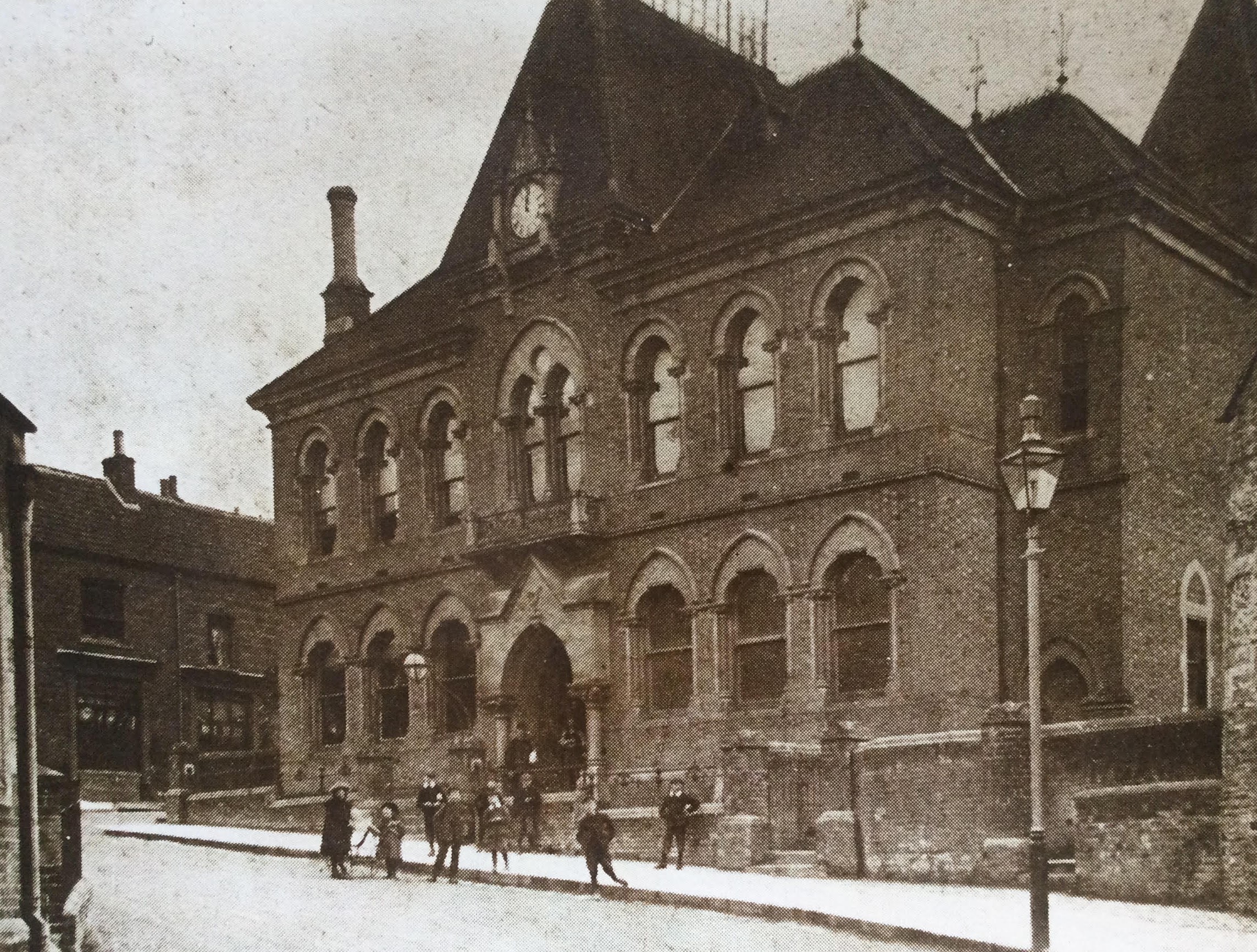
Have you ever wondered about the story behind this imposing building in Bratton Road?
Dating from 1873, as recorded in open ironwork on its front, it was the gift of Abraham Laverton, clothier and owner of the Angel and Bitham Mills, for the use of the people of Westbury.
His aim was to promote education, self-improvement and popular culture. It comprised a free school for 100 boys, not linked to church or chapel, a reading room for adult education and assembly room for cultural events and entertainments capable of holding 350 persons. The cost of the build was £4,000 which is about £500,000 in present day values.
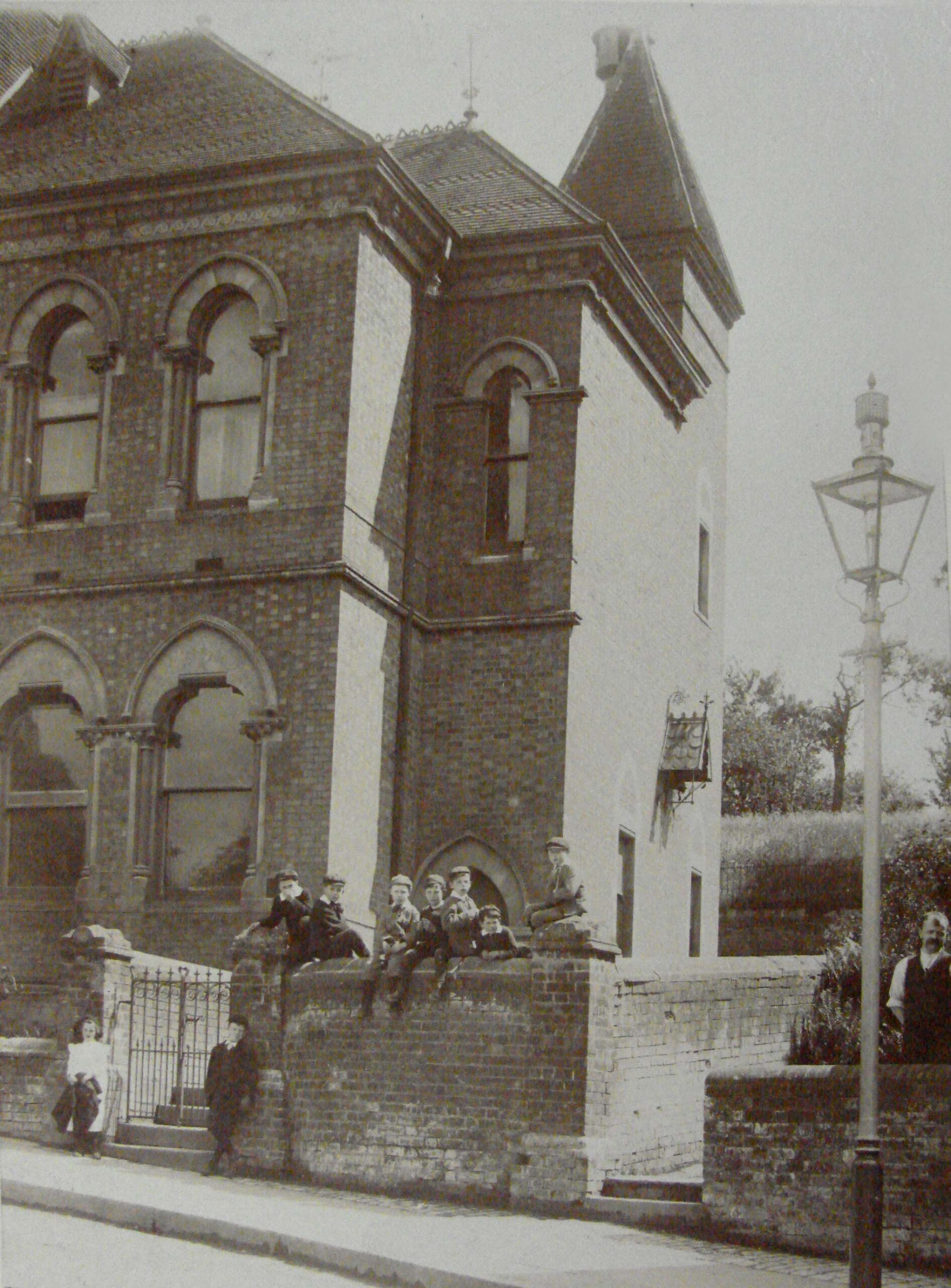
It was a testament to local talent, notably the architect William Jarvis Stent of Warminster, and Westbury craftsmen, mason and builder Worthy Keates, plasterer and tiler James Adlam, and plumbers and glaziers Neat and Son.
The gas installation and iron work was carried out by Tuck and Pike of Bath. The magnificent stained-glass window in the hall, representing arts and science through William Shakespeare, Isaac Newton, James Watt and Edward Landseer, was created by Horwood Bros of Frome. Thomas Parsons of Dilton Marsh made the desks and fittings for the schoolroom. The bricks and tiles were made at Mr Laverton’s brick works in Eden Vale.
The events were reported in the local press in considerable detail expressing the sense of anticipation and admiration for the building. The opening celebrations comprised two concerts; beginning at 3pm, and from 8pm. “The hall was crowded to suffocation in every corner, the staircases were lined, and there were hundreds outside unable to gain admission at any price. … The hall, with coloured glass window, decorated paneled ceiling and curiously carved corbels make the interior light and attractive. At night it presents a brilliant appearance when the clusters of gas jets on the handsome pendant and the gaslier over the platform are lighted”.
At the roof-raising feast for the benefit of those involved in the building’s construction, Abraham Laverton paid tribute to the efforts of the workmen: “The man who put the first spade into the ground- and I believe he is here tonight – ‘Yes, Zur, I be here’- will be able to tell his children I was the first to put a hand to that work, and there is some little pleasure in being able to say that.” ‘Zo there is Zur’ the same anonymous voice replied. Sadly, the identity of the individual is lost to history.
The Laverton Institute, as it was originally named, was managed by a trust from 1886. It was taken over by Westbury Urban District Council in 1928, when a new roof was made, removing the clock and tower. The council held its meetings there from 1899 until 1974. The school closed in 1925 and for many years a snooker club occupied the room. Petty sessions were held there from 1940 until 1991.
However, throughout its history it has been used for a wide range of public events and private functions. Since 1974 it has been occupied by Westbury Town Council, which has overseen its refurbishment, enabling it to maintain its position as a well-used and much-admired building that remains at the heart of the town.
For more information about the history of Westbury, pop into the town’s museum in the library or visit www.westburyheritagesociety.org.uk
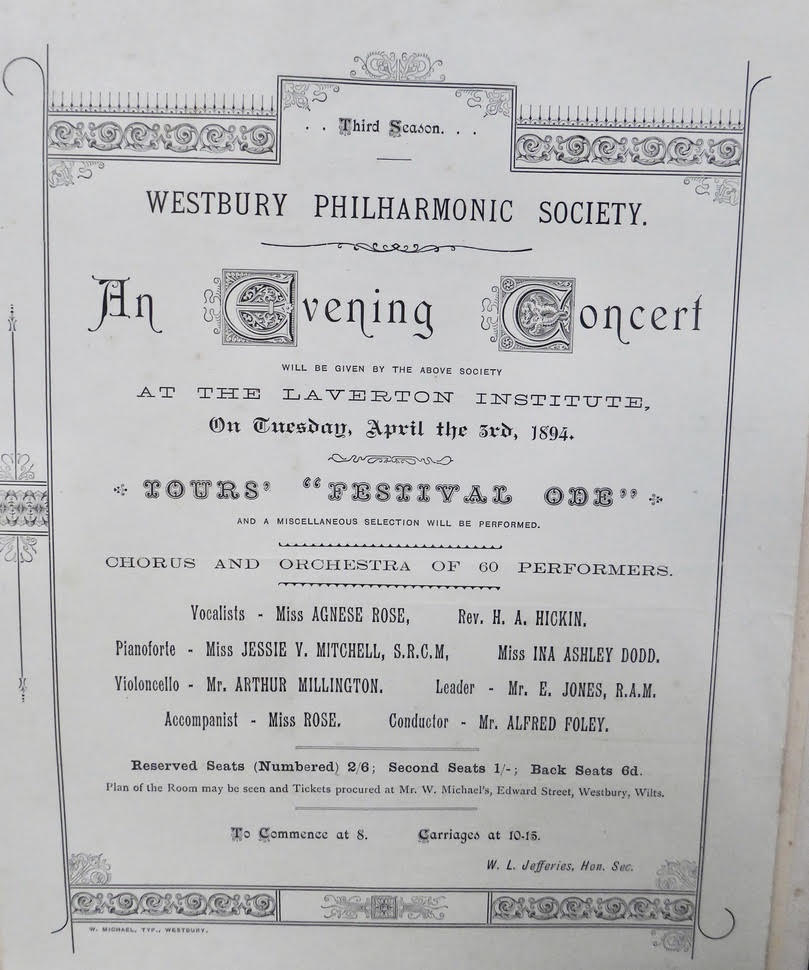
Above: The Laverton when it had a clock. Left: A concert poster and the school at The Laverton.
Send us your news!
Help us keep your community connected and informed.
Do you have an interesting story you would like to share? Have you seen something you feel needs more attention? Get in touch with a reporter today!
✉️ Click here to get in touch with a reporterSupport White Horse News
Help us keep your community connected and informed.
Local news is under pressure more than ever. Choose a monthly subscription or a one-off donation to support independent reporting in White Horse News.