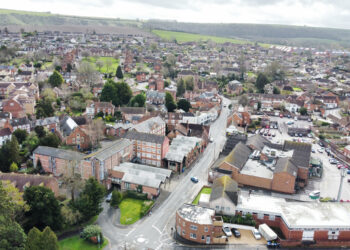
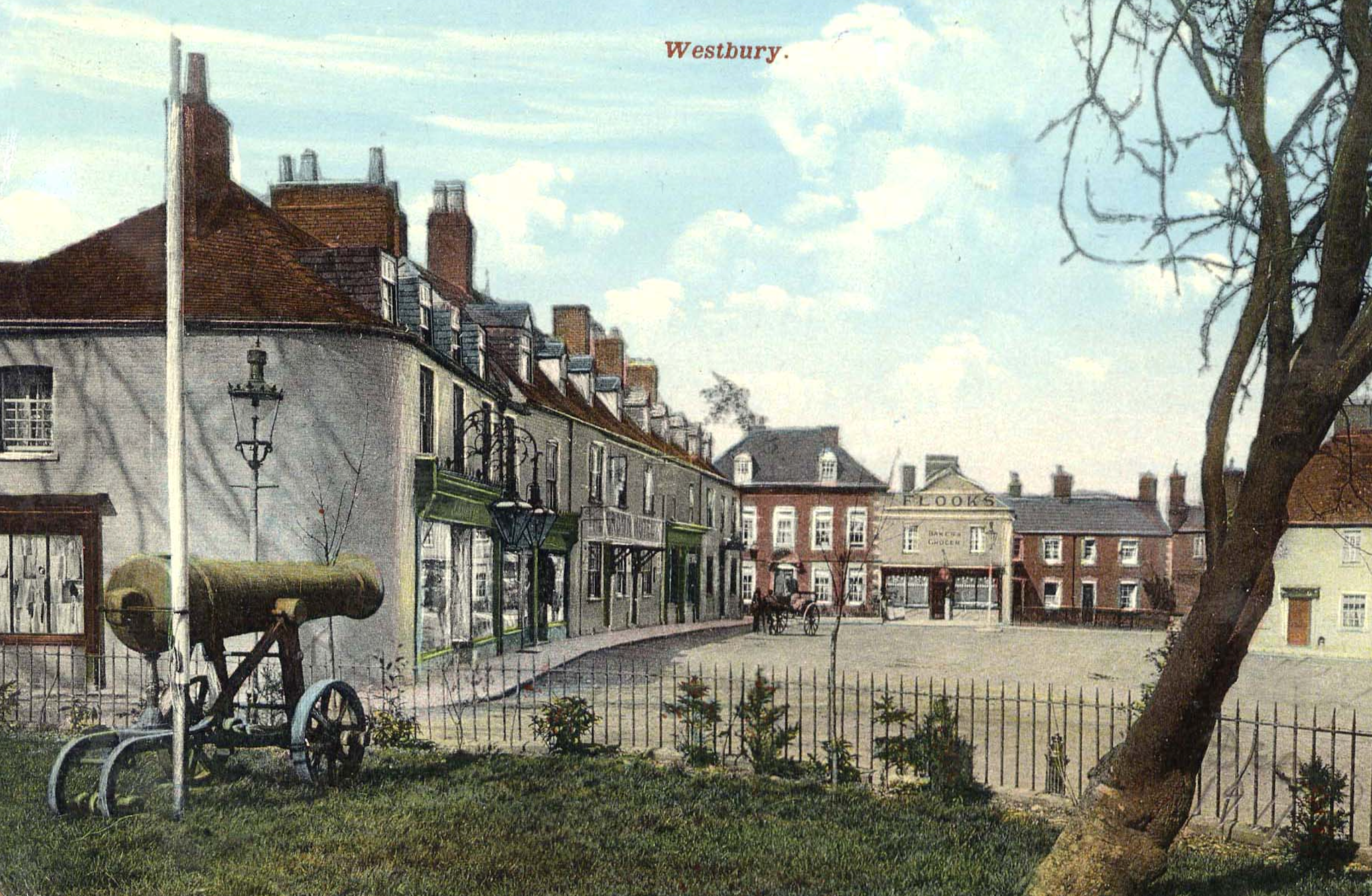
Behind some railings in Westbury Market Place, are the three houses of Cannon Green. Today no cannon is to be seen there, so how did this part of town get its name?
In the middle of the nineteenth century, Britain and its allies were at war with Russia. The Crimean War ended with the Treaty of Paris in 1856, leaving the British army in possession of many captured Russian cannons.
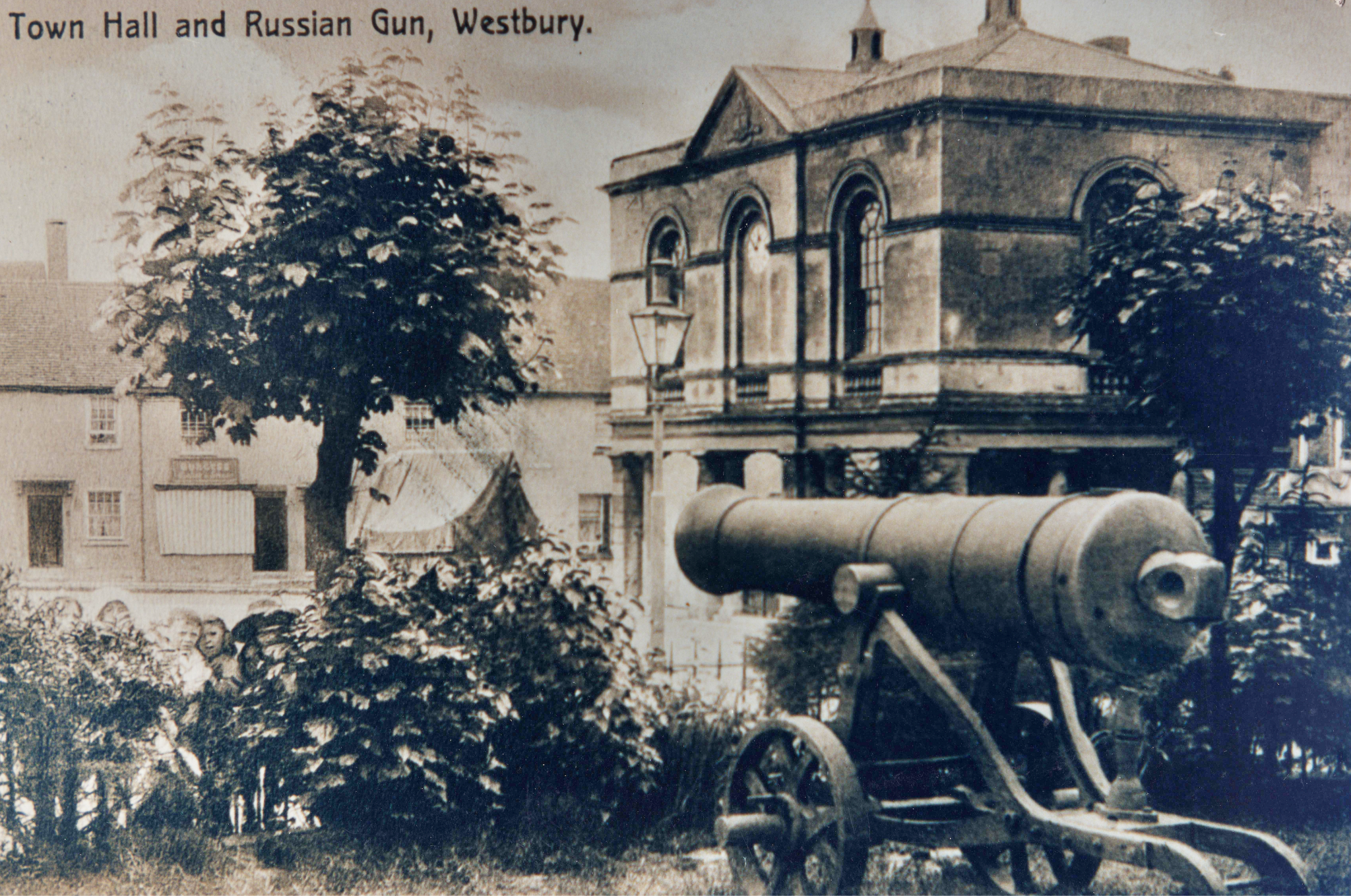
In Westbury, it was soon reported that there was a “general desire” among the inhabitants to acquire one of these spoils of war and a committee of local gentlemen was formed to bring this about. Sir Massey Lopes, MP for Westbury and Recorder of the Borough, approached the War Office on behalf of the committee and a cannon captured at Sebastopol was allocated to the town. The 36 pounder had been cast in 1852 and with its carriage, weighed over four tons.
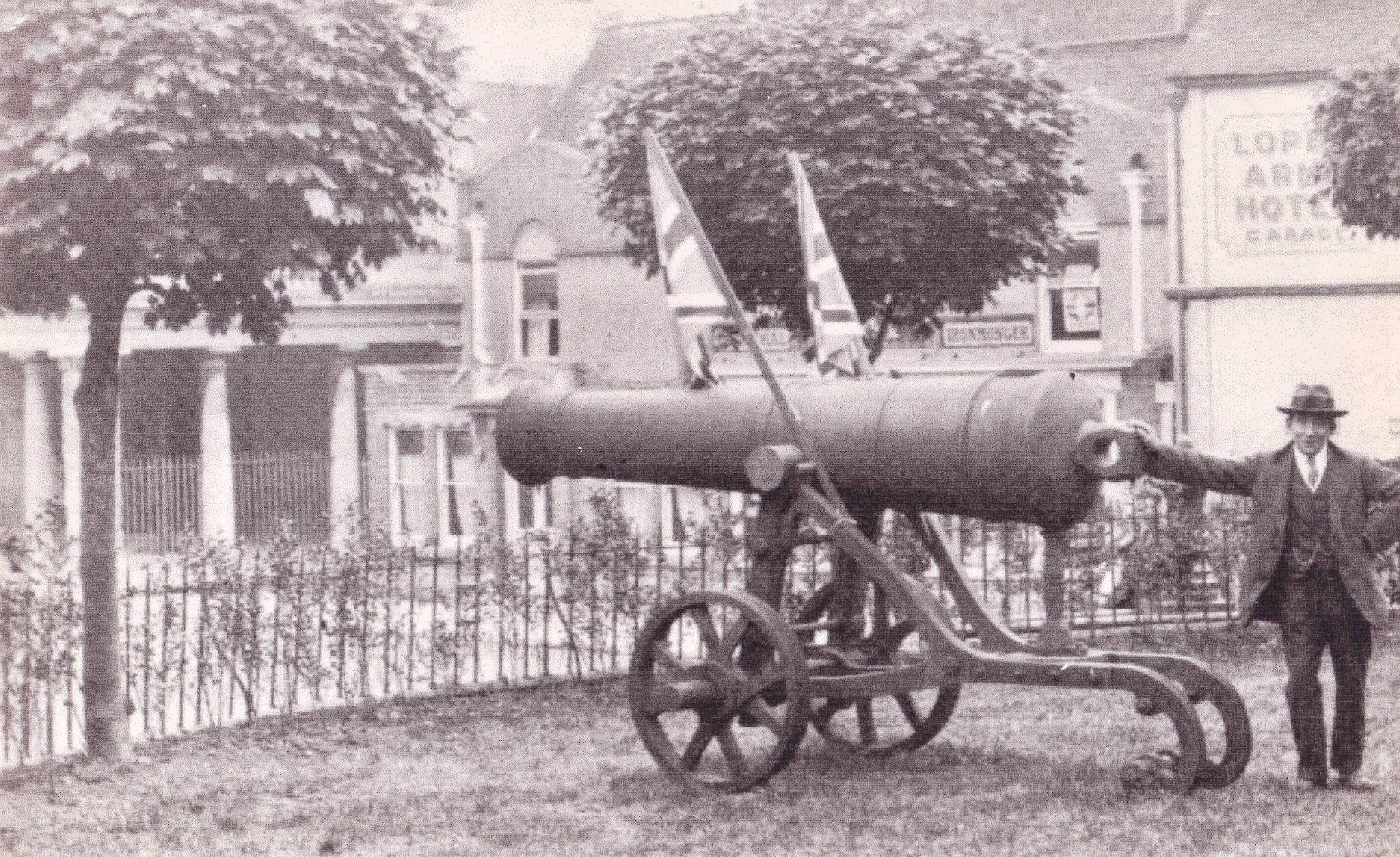
It arrived in town at the end of April in 1858 and it seemed nearly the whole population was at the railway station to greet it and watch it being taken to the Market Place. The church bells rang, two brass bands played and the procession, of about half a mile in length, was escorted by the police and soldiers from the Wiltshire Yeomanry and the 62nd Regiment of Foot. The cannon and its carriage, decorated with evergreens and banners, was pulled by six horses. Behind came gentlemen on horseback, ladies in carriages and townspeople on foot.
On arrival in the crowded Market Place, powerful machinery lifted the gun into position in front of the houses owned by Sir Massey Lopes, while Mr Goldsmith’s brass band played the “Waterloo Overture”. Several speeches were made. In his, Sir Massey praised the bravery of the British soldiers, while also making a political point about whether the war could actually have been avoided by diplomatic means. He hoped that the cannon would act as a memorial to those from the town who had died in the conflict and as a tribute to those who had served in the war.
After the ceremony, Sir Massey entertained more than fifty guests with a “sumptuous banquet” at his residence. The festivities concluded with a fireworks display organised by Mr Gingell and the ascent of two balloons.
Just over half a century later, memories of the origin of the cannon were beginning to fade. Sir Massey Lopes had sold his Westbury property and the site was now owned by Mr H R Watts, a watch and clock maker in Maristow Street.
A visitor to Westbury wrote to a local paper in 1915 to complain that the cannon was no longer visible from the Market Place because bushes and trees had grown up behind the railings. This prompted another letter from a reader who recalled sitting on his father’s shoulders to watch the fireworks in 1858.
By September 1940 Westbury Urban District Council was discussing whether the cannon should be sold for scrap. One councillor described it as an eyesore. The council was even uncertain as to who actually owned the cannon. The Ministry of Supply was contacted and asked if it was needed for the war effort. A month later their reply was that the cannon could stay as there was no intention to scrap relics of historic interest. But its reprieve was only temporary.
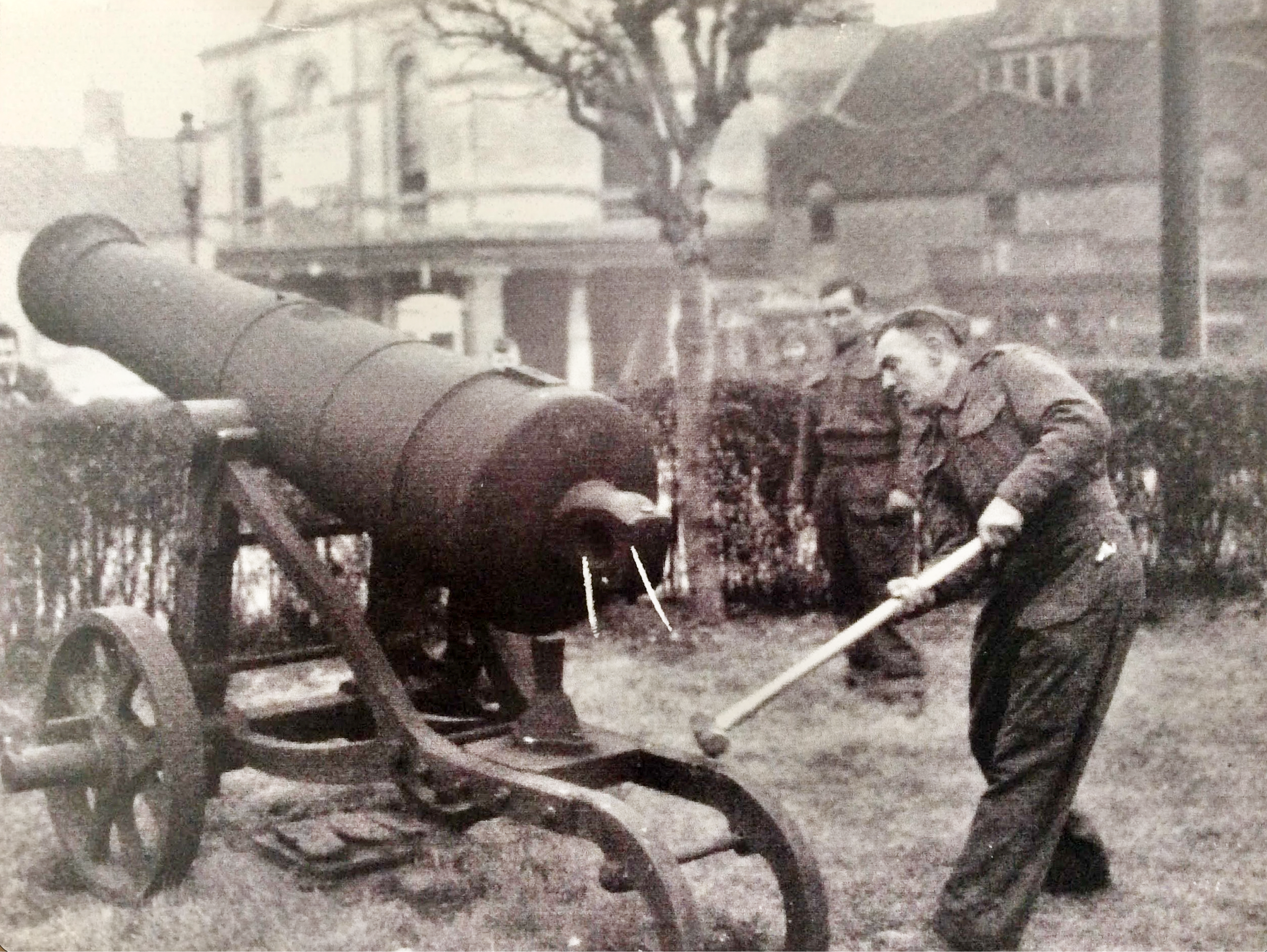
In early March 1942 there was a call from the government salvage department to ask for the cannon and it was dismantled and removed later that month, presumably to be melted down to make other weapons.
This is just one of many stories from the history of Westbury.
To learn more visit Westbury Museum in the library, have a look at our website at westburyheritagesociety.org.uk or follow us on Facebook.
Send us your news!
Help us keep your community connected and informed.
Do you have an interesting story you would like to share? Have you seen something you feel needs more attention? Get in touch with a reporter today!
✉️ Click here to get in touch with a reporterSupport White Horse News
Help us keep your community connected and informed.
Local news is under pressure more than ever. Choose a monthly subscription or a one-off donation to support independent reporting in White Horse News.