The history of our roads is always fascinating. Who doesn’t wonder how a street got its name or even why our Westbury roads are laid out the way they are?
Steve Hobbs has turned detective to trace one of the old roads our ancestors could have walked and shares his findings with us……
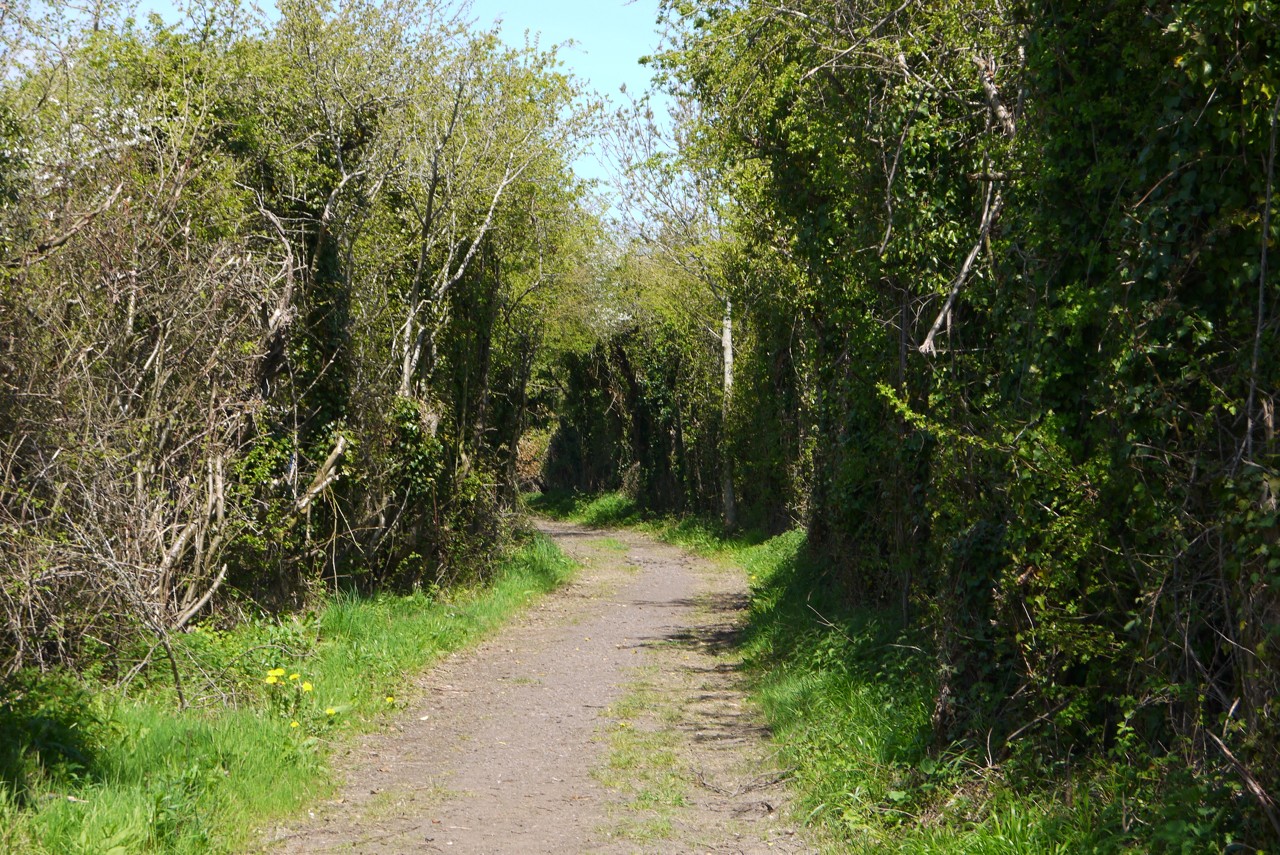
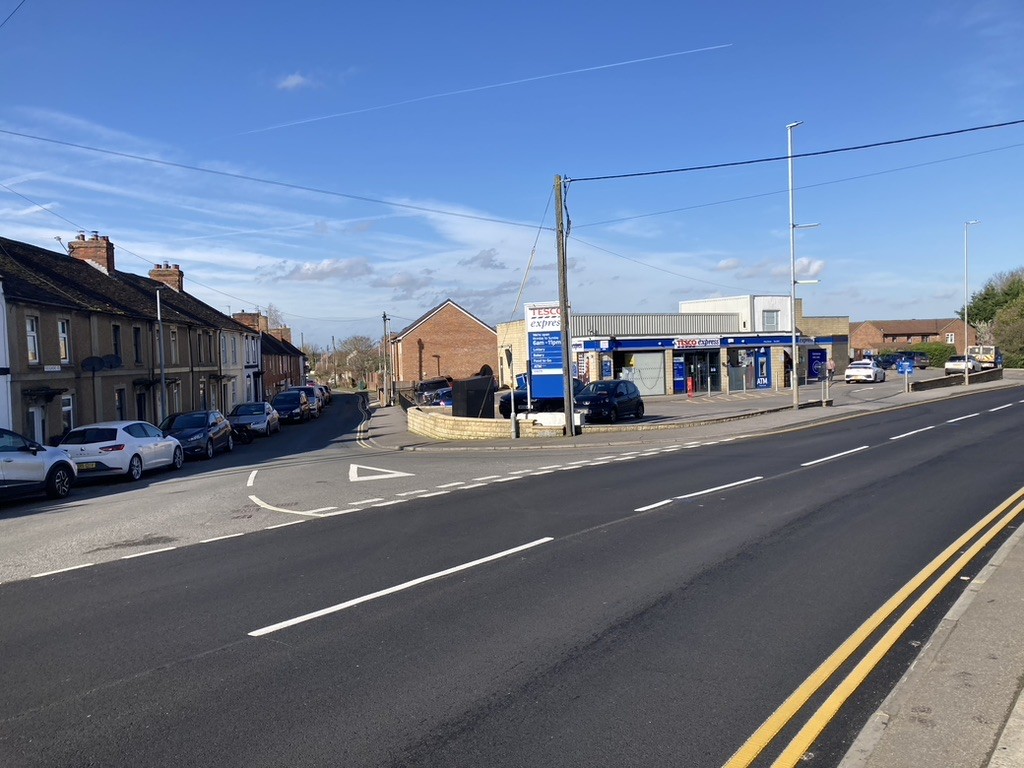
I have long been intrigued by the fact that Frogmore Road is flanked by two terraces of old cottages on one side and looks a more impressive approach to the town than Trowbridge Road which lacks any properties of great age. We have to look to documents in Wiltshire and Swindon History Centre (WSHC) at Chippenham to explain this anomaly.
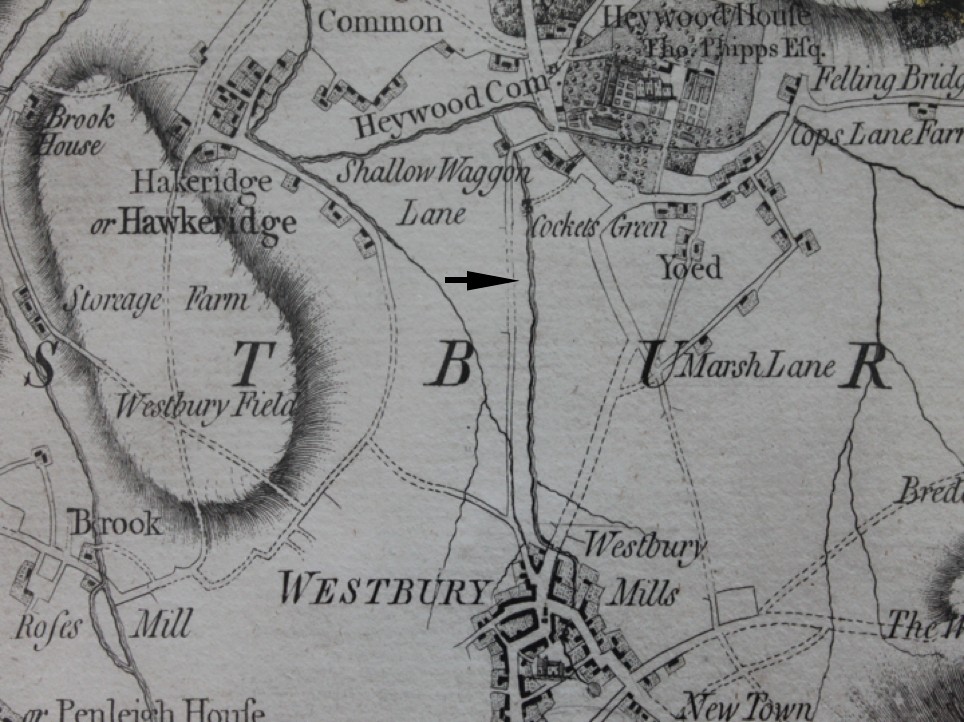
In 1759, Thomas Phipps of Heywood contributed £100 to the making of a new road by the trustees of the Westbury Turnpike. Three years later, a sketch map of the borough shows not one but two roads from Trowbridge coming into the town: the present route and one along Frogmore Road.
The surveyors were somewhat confused by the new arrangement and referred to what is now Fore Street as Frogmore Street and Trowbridge Street. A map of 1773 shows the full extent of both routes. The old way ran down Frogmore Road taking a right turn just before the junction with Meadow Lane. It ran along on the north side of Bitham Brook, through the Mead Lakes and the fields near the sewage treatment works and the solar farm, eventually joining up at Heywood with Shallow Wagon Lane.
The reason why a new route was constructed was the low-lying marshy ground over which the old road ran. A clue is in the name Frogmore…in fact one of the volunteers at the museum can recall a resident in that street commenting on the great number of frogs that would even hop into her house!
By 1808, an Enclosure award established a system of carriage ways and roads allowing access to former common land now in private ownership. A private carriage way, 30 feet wide, called Brook Farm Road, was laid out, running from the corner of the Ham and Hawkeridge Road. It was bolted onto the old route and assumed its name, Shallow Wagon Road.
The vestige of the old road leads onto to Heywood Farm and takes a narrow meandering line, in stark contrast to the wide straight Brook Farm Road. However, it still becomes waterlogged after heavy rain.
Stones and gravel in a short section of the path running along the bank of Bitham Brook, before it runs under The Mead road, are not a natural feature of the heavy clay found here.
Could they be part of the original road surface?
Find out more about Westbury history and our museum at www.westburyheritagesociety.org.uk
By Steve Hobbs
Send us your news!
Help us keep your community connected and informed.
Do you have an interesting story you would like to share? Have you seen something you feel needs more attention? Get in touch with a reporter today!
✉️ Click here to get in touch with a reporterSupport White Horse News
Help us keep your community connected and informed.
Local news is under pressure more than ever. Choose a monthly subscription or a one-off donation to support independent reporting in White Horse News.