A fossil collector whose discovery of a giant Jurassic sea predator in Westbury led to a new species being named in his honour has received an honorary degree from the University of Bristol.
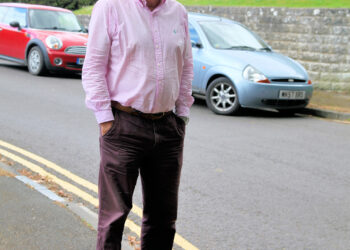
Simon Carpenter was awarded the academic honour in recognition of his fossil discoveries, his work supporting museums and universities and his efforts to help people understand the region’s geological history.


He said, “It’s a great honour that came out of the blue. It’s great encouragement for people like me who collect and provide material for people to learn and study from.”
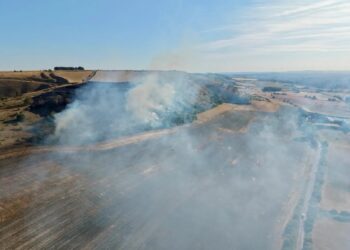
In 1994, Simon uncovered the remains of a previously unknown species of pliosaur while fossil hunting in a clay pit near Westbury.
The spectacular fossil was later excavated by a team from Bristol Museums and the University of Bristol, donated to Bristol Museum and Art Gallery and named Pliosaurus carpenteri in recognition of Simon’s discovery.
The giant marine predator now lives on as ‘Doris’, a life-sized model suspended from the ceiling of Bristol Museum and Art Gallery, where it tells the story of a discovery that helped advance scientific understanding of Jurassic sea life.
Over the years, Simon, who now lives in Frome, has built up an extensive fossil collection which has contributed to scientific research and museum collections.
Professor Mike Benton, Professor of Vertebrate Palaeontology, said, “Simon has been a great contributor to society in the southwest of England. We are proud as a university to honour such a great citizen of the Bristol area.”
Simon’s fascination with fossils began in childhood in nearby Saltford, where discoveries in the garden of his family home sparked an interest that continued throughout his life.
After developing his interest in geology and fossil collecting, he went on to take evening classes with the University of Bristol’s School of Earth Sciences while pursuing a career in medical illustration and public health.
He said, “I used to go in early and there was a technician in the Earth Sciences department whom I used to ask to leave the display cabinets open so I could go through the collections and learn. You can’t do that today, but I was trusted.”
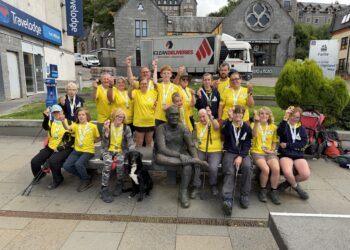
Over the past 30 years, Simon has opened his excavations to teams of volunteers, creating opportunities for University of Bristol students to gain hands-on field experience and supporting research projects based on his discoveries.
He has also helped people learn more about the region’s geology by leading the creation of geological information boards along the Bristol to Bath Railway Path, securing funding and overseeing the design of the displays.
Picture credits: above: University Of Bristol; above left and below: Simon Carpenter
Send us your news!
Help us keep your community connected and informed.
Do you have an interesting story you would like to share? Have you seen something you feel needs more attention? Get in touch with a reporter today!
✉️ Click here to get in touch with a reporterSupport White Horse News
Help us keep your community connected and informed.
Local news is under pressure more than ever. Choose a monthly subscription or a one-off donation to support independent reporting in White Horse News.